
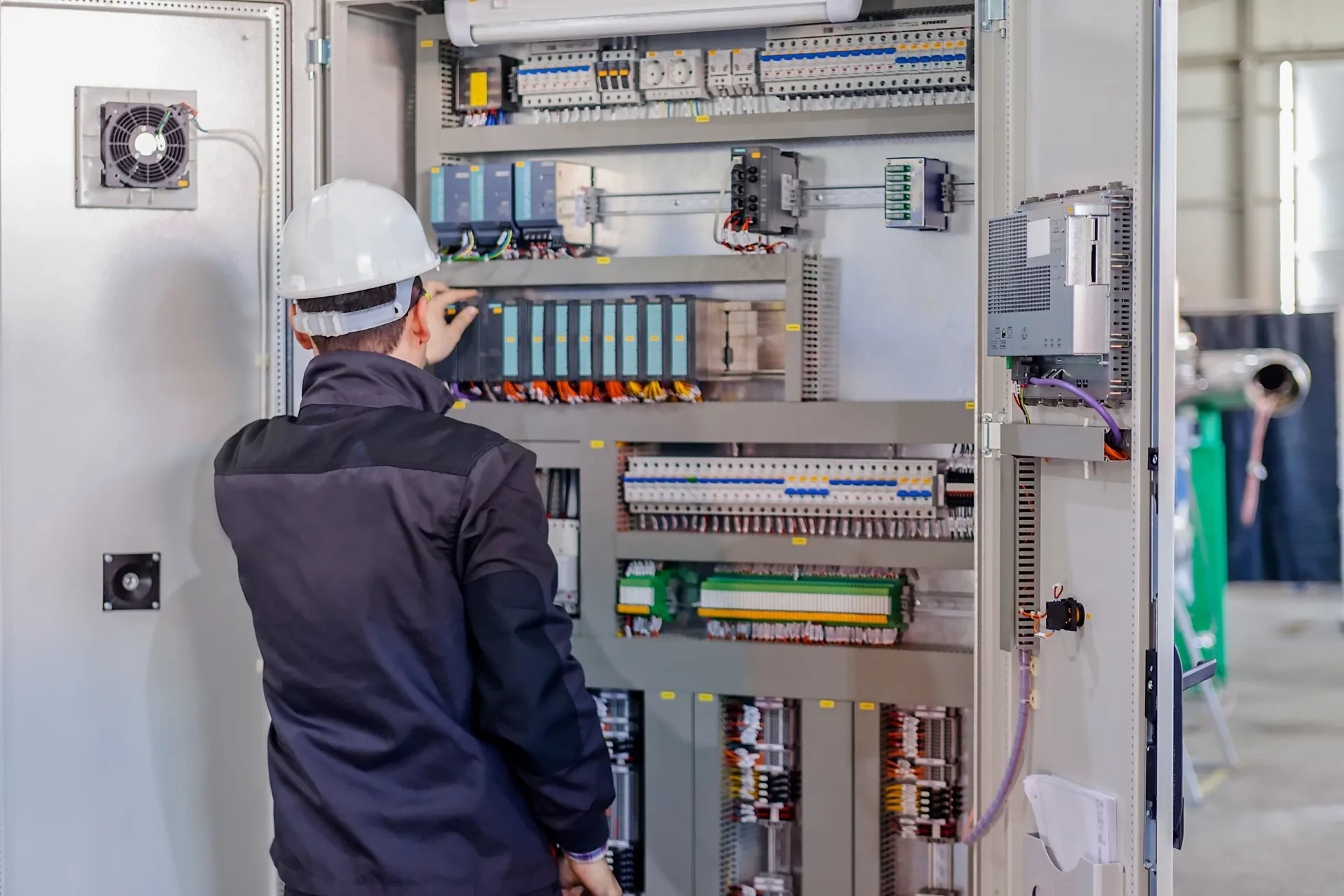
Testing services
DGUV V3 and V4 inspection for machines, installations and equipment
We inspect machines, fixed electrical installations and portable equipment at your site to DGUV V3, the inspection of electrical equipment required in Germany, and also to DGUV V4. A qualified electrician inspects the electrical system and the safety functions, and you receive an inspection report with measured values.
Selected customers

















DGUV V3 inspection of machines: what matters
Machines are inspected after modifications and at regular intervals. For this you need three things: defined inspection intervals, complete records and measured stopping times of the safety devices.
Define and document inspection intervals for each machine
As the operator, you determine the type, scope and intervals of the inspections on the basis of your workplace risk assessment. Once this is defined for each machine, inspection dates can be planned and documented.
Inspecting electrical equipment to EN 60204-1
We test protective conductor, insulation and function on the basis of the circuit diagram, protection concept and modifications. The inspection to EN 60204-1 and DIN VDE 0105-100 covers the entire machine, including what a pure device measurement does not capture.
Testing safety functions with stopping time measurement
For emergency stop, guard locking and light curtains, the actual response time counts. The measured stopping time shows whether the safety distance to DIN EN ISO 13855 is still sufficient.
Which machines and installations we inspect to DGUV V3
The inspection to DGUV Regulation 3 applies to all kinds of machines. We inspect the electrical equipment and the safety functions of each machine, including older machines and third-party machines. Typical groups of installations:
Machines for manufacturing, forming, machining and processing parts or materials.
Assembly stations, robot cells and systems for feeding, joining or positioning.
Systems for material transport, sorting, product guidance and packaging.
Test benches and special-purpose machines for specific processes and particular production tasks.
Your machine does not fit any of these groups? Send us an enquiry.
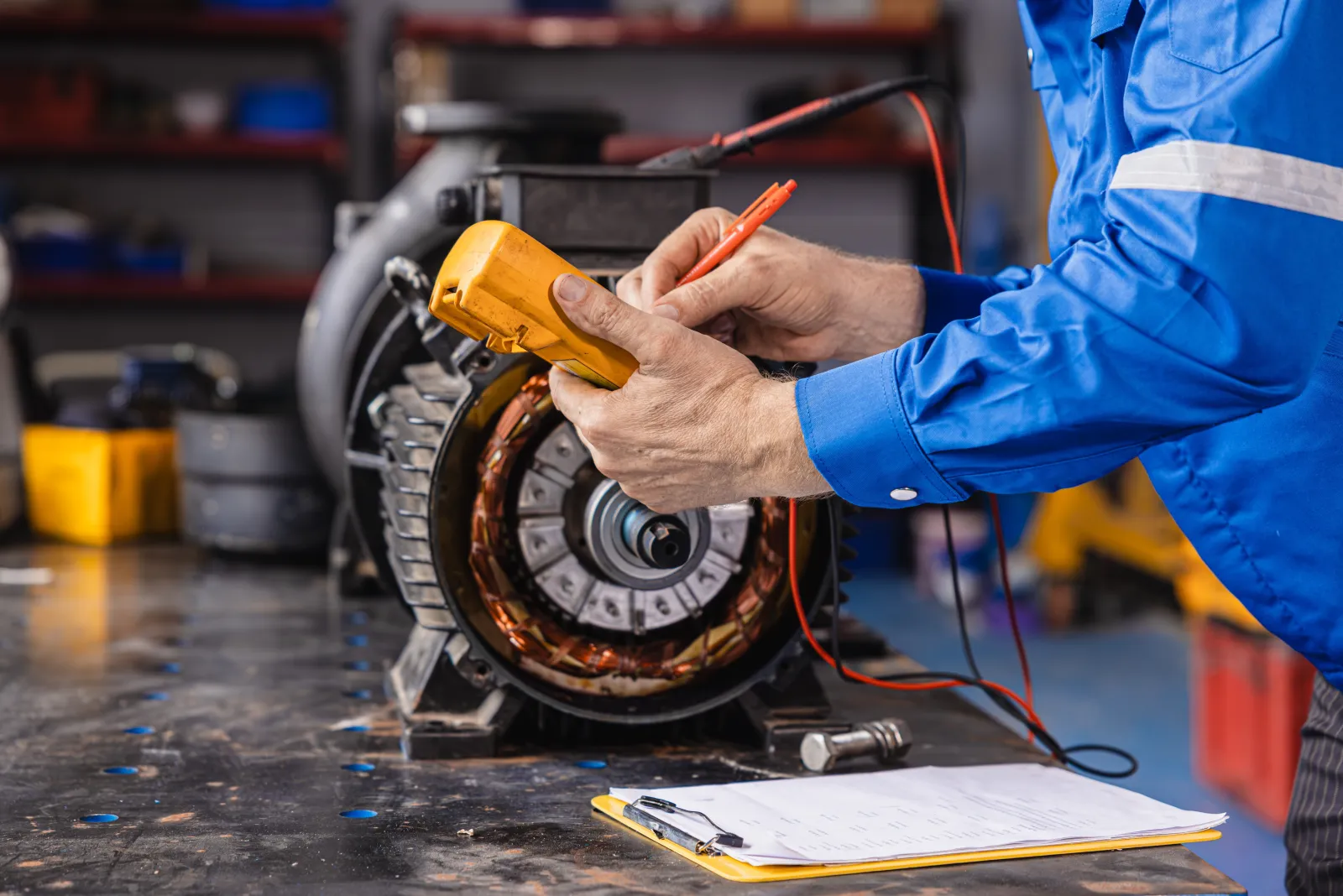
Scope of inspection: one appointment, one inspection report per machine
We inspect the electrical system and the safety functions at the same appointment. We document the result so that you can present it to your employers' liability insurance association, your insurer or in an audit.
Electrical equipment
Visual, protective conductor, insulation and functional testing of the electrical equipment
Safety functions
Testing of emergency stop, guard doors, guard locking and light curtains including stopping time measurement
Defects
Classifying defects by severity and enclosing a fixed-price quotation for their remedy
Inspection report
Inspection report with measured values, inspection date and recommendation for the next inspection
Inspecting fixed installations and portable equipment
In addition to machines, we inspect fixed electrical installations such as distribution boards and installations in production and workshops, as well as portable equipment such as power tools, extension cables, cable reels and multiple socket outlets. The inspection is carried out by a qualified electrician.
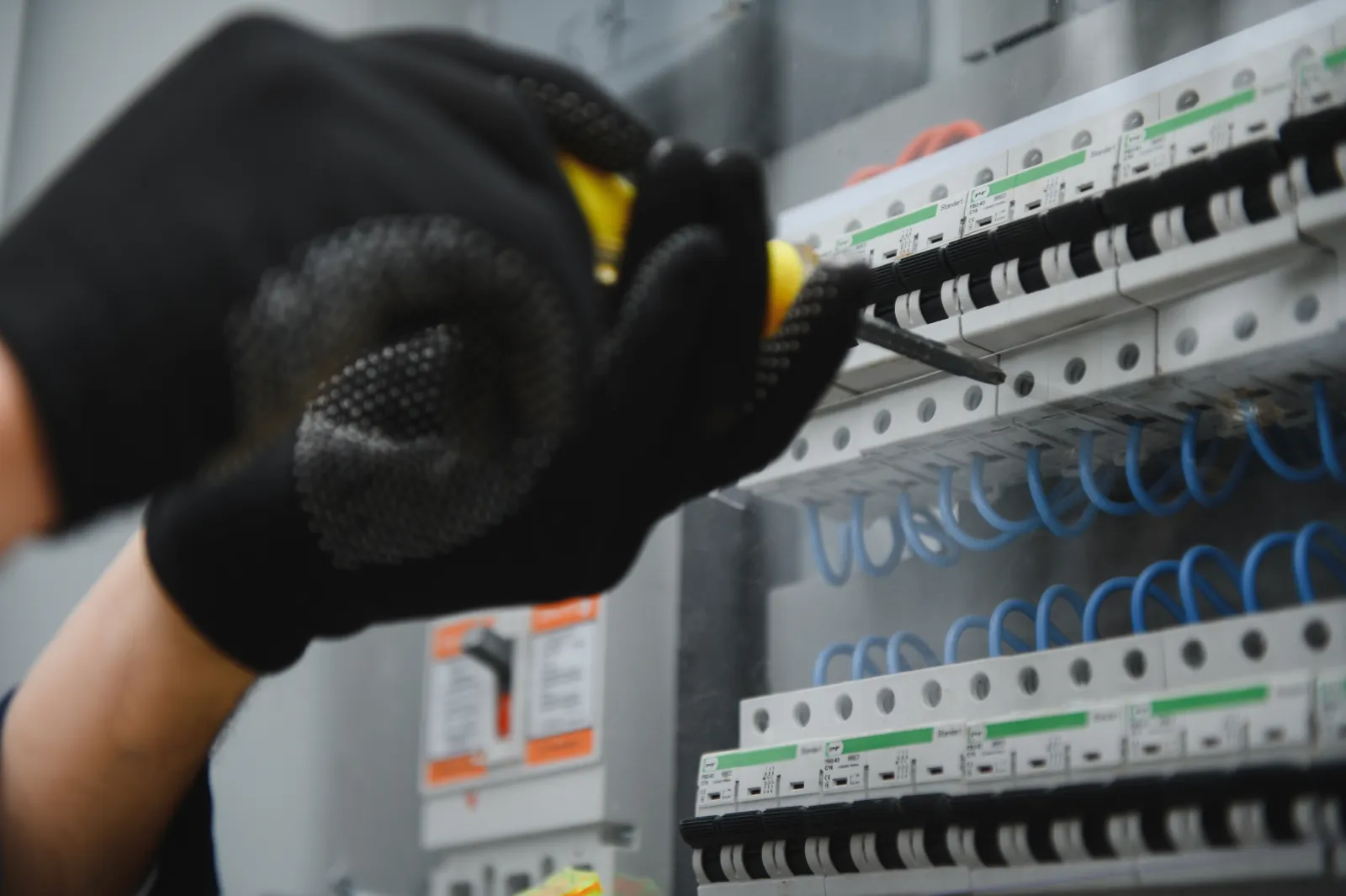
Fixed installations
We inspect the condition, protective devices and labelling of distribution boards and installations, test their function and measure the protective measures.
Portable equipment
To DIN EN 50699 (VDE 0702), we inspect housing, cable and plug and measure the protective measures for each device.
Test report
You receive measured values and the result for each installation and device, classified defects and a recommendation for the next inspection date.
Intervals
Guide value under DGUV Regulation 3: four years for fixed installations, six months for portable equipment, longer if the defect rate is low.
DGUV V4 inspection for the public sector
For public-sector institutions, DGUV Regulation 4 applies instead of DGUV Regulation 3. We also inspect to DGUV V4.
Scope
The public-sector accident insurance funds apply the regulation to their members, for example municipalities and municipal institutions.
Inspection
Electrical installations and equipment are inspected before first commissioning and at regular intervals.
Proof
The inspection report is your proof.
Cost of the DGUV V3 inspection: fixed price and plannable dates
What a DGUV V3 inspection costs depends on the number, age and equipment of your machines. Before the inspection, we quote you a fixed price for it. You set the intervals according to your workplace risk assessment, and we enter them in the inspection report.
Based on your machine list, we quote a fixed price per machine, installation, device or inspection package.
As the operator, you determine the type, scope and intervals of the inspections. We adopt your specifications or propose intervals for you to set yourself.
We combine recurring inspection dates in an annual contract or in NIKLAS CARE.
Send your machine list, receive a fixed price
Send us your list of machines or equipment. We will quote you a fixed price and plan the inspection date with you.
What we clarify before a quotation
Scope and price depend on the number, age and equipment of your machines. We discuss these points with you in advance.
Which machines are included?
We record machines, year of construction, controls and existing documentation and use this to put together fixed-price packages according to effort and complexity.
Which inspection intervals apply to you?
We adopt your intervals from the workplace risk assessment or propose intervals that you set and approve yourself.
When can the inspection take place?
We schedule the inspection during downtime windows, shutdowns or at the weekend. Your production keeps running.
Which documents are available?
Circuit diagrams, previous test reports and details of modifications shorten the inspection. We record anything missing on site.
DGUV V3 inspection process: machine list, inspection, report
First we clarify the inventory and the intervals. Then we carry out the inspection during the agreed downtime and discuss the results with you.
We record your machines, existing inspection records and the intervals you have set.
We inspect the electrical equipment, measure the safety functions and record the values for each machine.
You receive the report for each machine. For defects we quote a fixed price and remedy them if you commission us.
Service after the inspection
The inspection shows the condition of the machine. Afterwards we remedy defects and help you maintain this condition.
Remedying defects
We remedy electrical and control defects on the basis of a fixed-price quotation.
Modernisation
We replace outdated controls, drives or safety technology as part of a retrofit.
Recurring inspection
We include the inspection dates in an annual contract or in NIKLAS CARE.
Frequently asked questions about DGUV V3 and V4 inspection
Here we answer the questions of operators who have their machines inspected. You set the intervals and the scope of inspection according to your workplace risk assessment.
Which inspections are mandatory for machines under DGUV V3 and BetrSichV?
Under DGUV Regulation 3, a qualified electrician inspects electrical installations and equipment before first commissioning, after modifications or repairs and at set intervals.
Under the German Industrial Safety Regulation (BetrSichV), a person qualified to carry out inspections regularly inspects work equipment that is exposed to damaging influences. In addition, there are inspections after modifications that require an inspection.
You define in your workplace risk assessment which inspections apply to your machines and to what extent. We help you classify them.
How often does a machine have to be inspected under DGUV V3?
As the employer, you set the intervals for each machine. To do so, you determine the type, scope and intervals of the inspections on the basis of the workplace risk assessment. TRBS 1201 and the implementation guidance for DGUV Regulation 3 give guide values.
For fixed electrical installations, the implementation guidance for DGUV Regulation 3 gives a guide value of four years. Heavily used machines may require shorter intervals.
We list the intervals you have set in the inspection report so that the next date can be planned.
What does the inspection of the safety functions include?
It includes the functional test of emergency stop, guard door monitoring, guard locking and light curtains. For electro-sensitive protective equipment, we also measure the stopping time.
The stopping time is used to calculate the safety distance to DIN EN ISO 13855. If it is longer than assumed in the design, the existing distance may no longer be sufficient.
We record deviations in the report and show which measure eliminates them.
Can older machines and third-party machines also be inspected under DGUV V3?
Yes, we inspect machines regardless of the manufacturer. If documentation is missing for older machines, we record the current condition on site.
For older controls, we clarify whether spare parts and documentation are still available and point out a possible modernisation.
We deal with substantial modifications to a machine separately, because they affect CE conformity.
What happens if defects are found in a DGUV V3 inspection?
We classify defects by severity, from a note to a defect that rules out further operation.
For each defect we describe the remedy and quote a fixed price.
You decide on the remedy: you can commission us or arrange it yourself.
Do you also inspect portable equipment such as power tools and extension cables?
Yes. We inspect portable electrical equipment to DGUV Regulation 3 with a visual inspection, measurements and a functional test to DIN EN 50699 (VDE 0702).
The implementation guidance gives a guide value of six months for this. If the defect rate is below two per cent, longer intervals are possible, up to one year in workshops and up to two years in offices.
What does a DGUV V3 inspection cost and what do you need for a quotation?
We quote the price as a fixed price once we know your details. For this we need a list of the machines with manufacturer, year of construction and location, even in rough form.
Existing test reports, circuit diagrams and details of modifications, where available.
A preferred date or downtime window. We will ask you for any missing details.
Request a DGUV V3 and V4 inspection
Send us a machine list with manufacturer, year of construction and location as well as existing inspection records. We will get back to you with a proposal for scope, date and fixed price.

Simon Niklas
Mechanical engineer, M.Sc.
+49 941 56956720[email protected]
“Good engineering proves itself in day-to-day production. That is why we combine technical planning with a close understanding of process, operation and maintenance.”
Book a consultation