
Custom software
Custom software development for industry and SMEs
We take on software development for industrial companies and SMEs. Our custom software handles entire processes in the warehouse, orders, testing and administration, without duplicate entries.
Examples: warehouse, orders, testing, maintenance
Four typical processes that we automate with custom software. We tailor functions, interfaces and operation to your company.
For small manufacturing and assembly companies: your team books goods receipts and withdrawals by scan, finds material at the right storage location and sees available stock. The software calculates the requirements for each order, reserves parts and reports shortages for replenishment. This saves search time and duplicate bookings, and missing material is noticed early.
Order, material and workstations in one process: the software plans work steps according to your rules, checks material availability and provides the next tasks. Feedback updates the production status and triggers the next steps. Your team sees what is coming next, and there are fewer queries and less manual coordination.
We automate the entire test sequence: accepting the test order, assigning the component, controlling the measurement and evaluating the results against your limit values. The software documents the sequence and triggers the agreed approvals or retests. Nobody has to record recurring tests by hand any more, and there is a result for every component.
Organising faults, maintenance orders and assignments centrally: the software assigns reports to the right installation, plans due work and brings together tasks, responsibilities and spare parts. Feedback records the current status and triggers the agreed next steps. Your team needs less coordination and can see at any time which work is still open.
Selected customers











Mapping your process in software
Describe the process that you currently handle manually. We will show you how software takes it over.
Software development for your company: how it works
It starts with your specific work process. We develop and test the software with your team and compare the actual effort before and after the roll-out.
Recording the process
We record processes, rules, exceptions and the time required. Together we choose the first complete process and a verifiable objective.
Implementing software and automation
We develop the user interface, business rules and interfaces for your process and connect existing data and systems.
Trying it out in everyday use
Your team handles real processes with the new software. We check operation, special cases and error handling and measure the actual time required.
Using it in operation
We transfer your data, instruct your team and support the start. We define rights of use, documentation, operation and maintenance with you beforehand.
Questions about custom software and process automation
Answers on functions, interfaces and operation, and on when custom software pays off.
When is custom software worthwhile?
When your process needs special rules, devices or interfaces that a standard solution can only map with a lot of manual work.
It brings the most benefit for frequent processes in which several departments are involved and data is entered more than once.
We compare the time saved with the development and operating costs. If standard software is sufficient for your needs, we tell you so.
How easy is the warehouse management software to use?
We design the user interface around the daily tasks of your team: goods receipt, withdrawal, relocation and stocktaking.
Item images, clearly named storage locations and barcode or QR scans make operation easier. We select the devices for this together with you.
Employees try out real bookings before the roll-out. In doing so, we check how easy it is to understand, the time required and typical input errors.
Can the software handle an entire work process automatically?
Yes. Once data, interfaces and decision rules are defined, the software executes the complete digital process chain.
One example is material supply: determining requirements, reserving stock, triggering replenishment and assigning the delivery to the order.
Where a person has to give approval or a special case occurs, we build this in deliberately. Physical activities such as putting into storage or assembly still require people or suitable automation technology.
Can existing ERP systems and programs remain in place?
Yes, provided suitable interfaces and access are available. We check which data and functions can be taken over or connected.
Before development, we define which system is leading for which data, how transfers and errors are handled and what needs to be adapted.
Where can I find PLC programming and SCADA?
Control programming, plant networking and plant visualisation are part of our PLC and SCADA programming service.
On this page we describe custom applications for operational work processes, such as warehouse management, orders, testing and maintenance.
How are rules, approvals and exceptions automated?
We record the complete process with your team: inputs, decisions, responsibilities and special cases.
The software executes the defined steps, checks prerequisites and lists open approvals and errors so that nothing is left undone.
Can we extend the custom software later?
Yes. New functions, processes and interfaces can be added. We plan extensions that you can already foresee today from the outset.
We agree on rights of use, documentation, operation, maintenance and the handling of later changes in advance.
Does the software run in the browser or as a local application?
Both are possible: a web application in the company network or a local application on the machine or workstation PC.
We decide which variant it will be based on your workstations, existing systems and operational requirements.
We agree on access, data storage, data backup and responsibilities for operation before the roll-out.
How do you check time savings and lower personnel costs?
We measure the current effort per process and record queries, rework and recurring checks.
In pilot operation, we compare the same tasks with the new software. The number of processes and the processing time saved show the capacity gained.
Lower costs arise, for example, from fewer overtime hours or from avoiding additional staff. Time that is freed up can also be used for more orders.
What do you need for an initial meeting?
Show us a typical process and explain which steps cost time today or regularly go wrong.
Existing lists, screenshots, the programs you use and a rough number of processes are helpful. We clarify missing information together.
We then define the first complete process and discuss functions, user operation, roll-out and ongoing operation.
What tasks should your software take on?
Warehouse, orders, testing or administration: show us the process that costs your team time every day. We will tell you which steps software can take over, how it fits in with your existing programs and whether it pays off for you.
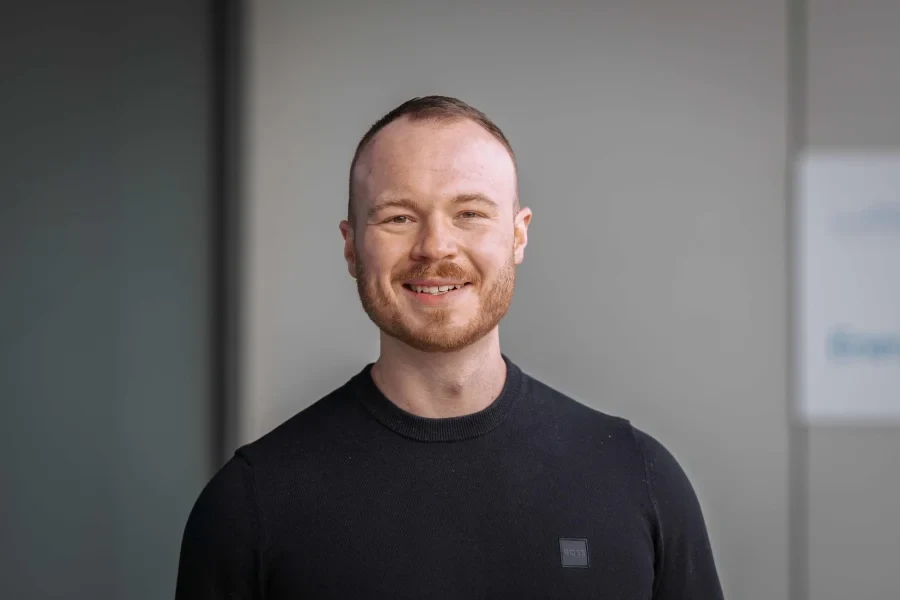
Simon Niklas
Mechanical engineer, M.Sc.
+49 941 56956720[email protected]
“Good engineering proves itself in day-to-day production. That is why we combine technical planning with a close understanding of process, operation and maintenance.”
Book a consultation