01 · INITIAL SITUATION
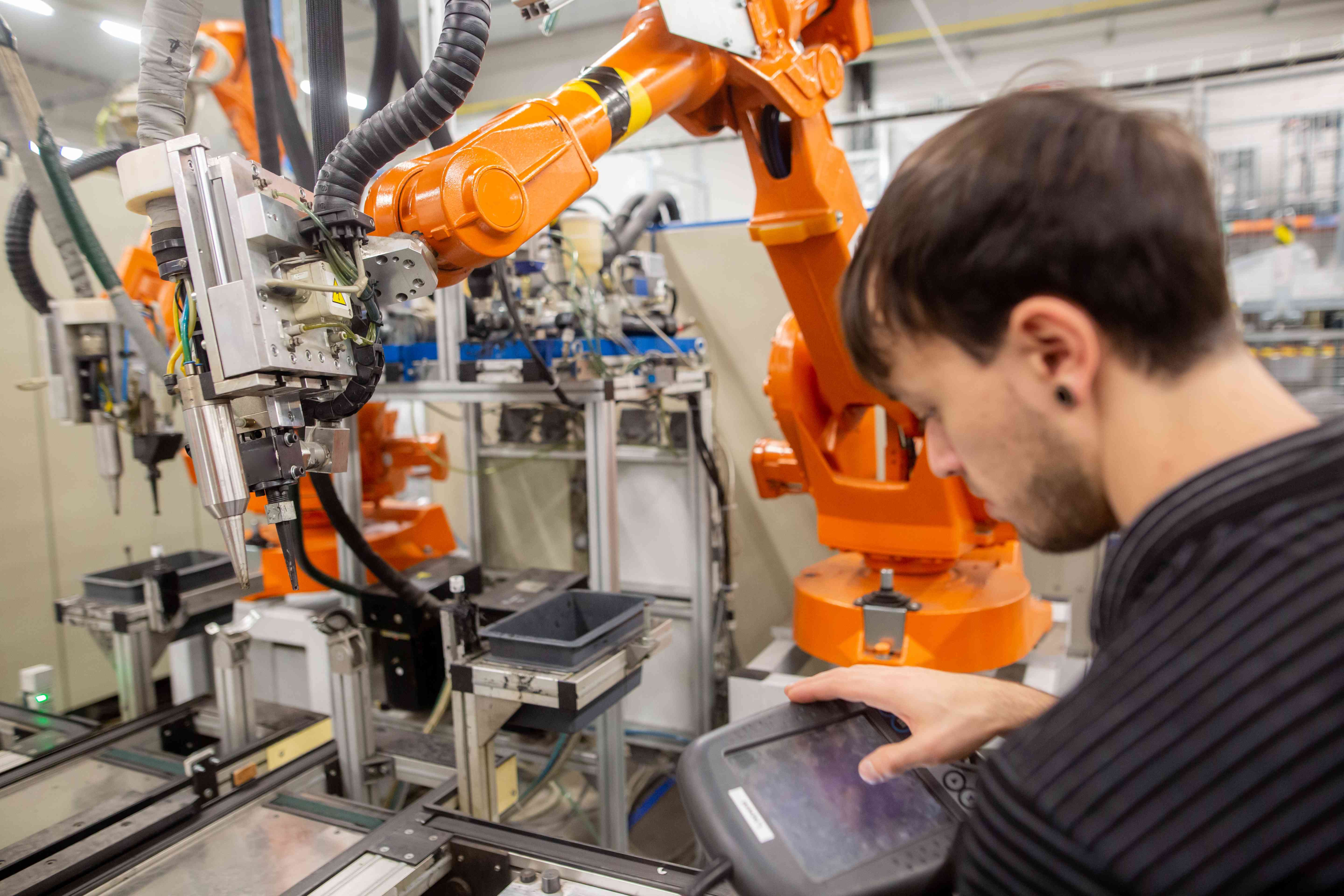
We develop the complete system sequence: part presentation, processing, quality inspection, safety, operation and restart.
01
PROCESS
Variants, tolerances, cycle time, manual exceptions and quality characteristics are assessed using real components and process data.
02
SYSTEM
The cobot or industrial robot, gripper, vision system, feeding technology and safety concept are derived from the task. Selection is manufacturer-independent.
03
OPERATION
Operator guidance, diagnostics, recipe changes, residual quantities and defined recovery procedures determine future availability.

02 · TECHNICAL SYSTEM CONCEPT
Mechanics, electrics, software and safety are developed as an integrated system. Interfaces, responsibilities and acceptance criteria are documented transparently throughout the project.
01
Feasibility check using process data, components and an economic viability range
02
Cell layout, gripping technology, sensors, robotics and safety concept
03
Mechanical design, electrical engineering, PLC and robot programming
04
Assembly, commissioning, documentation, training and production support
03 · SYSTEM & SERVICE
You receive a production-ready system with coordinated mechanics, electrics, software and safety. We support the production ramp-up and remain available for service, maintenance and technical modifications.
01
CONCEPT
The degree of automation, customer interfaces, variants and required preparatory work are clearly defined before the project starts.
02
SAFETY
Access points, operating modes, speeds and collaboration assumptions are technically assessed and integrated into the controls.
03
SOFTWARE
PLC, robotics and peripherals communicate through traceable enables, fault states and restart sequences.
04
RAMP-UP & SERVICE
We commission the system under production conditions, train operators and provide support with optimisation, maintenance and technical questions.
04 · IMPLEMENTATION
The project is structured into assessment, technical implementation and production ramp-up.
01
Video, on-site assessment and sample parts provide a sound basis for feasibility and the appropriate degree of automation.
02
Critical steps are tested before mechanics, electrics, software, safety and documentation are fully engineered.
03
We commission the system, validate real product variants and train operators and maintenance personnel.
DISCUSS YOUR PROJECT WITH US
Describe the current sequence, cycle time and key component data. We assess automation feasibility, technical constraints and the right project starting point.